
Commercial insurance can feel complex. You want the right protection—but not at the wrong price. At Lathrop Insurance, we work closely with business owners to make sure coverage is appropriate and costs are well-managed. One of the most valuable things you can do? Understand how insurance companies calculate your premiums.
Knowing what goes into rating a policy can help you control costs, avoid surprises, and present your business in the best light to insurance carriers.
The Basics of Commercial Insurance Rating
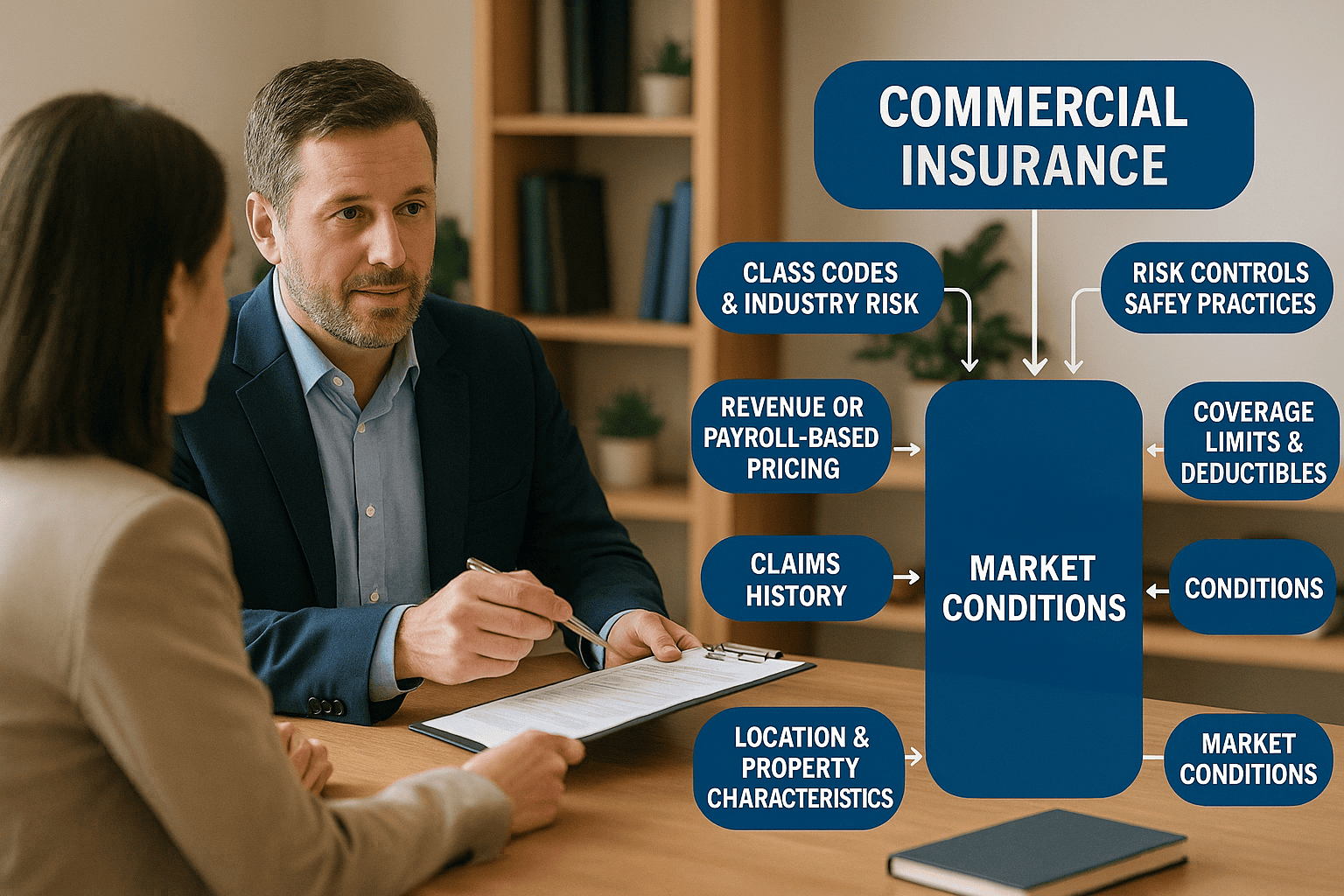
Insurance companies price your policy based on how much risk they’re taking on. While each line of coverage—General Liability, Property, Workers’ Comp, Commercial Auto, etc.—is rated differently, several core factors are consistent across the board:
1. Class Codes & Industry Risk
Every business falls into a classification. Whether you’re a contractor, restaurant, retailer, or manufacturer, your “class code” plays a major role in determining your base rate. Some industries are simply riskier than others—welding shops, for example, will pay more than accounting firms.
2. Revenue or Payroll-Based Pricing
For General Liability, premiums are often tied to your revenue (except for contractors, where it’s payroll). Workers’ Comp is always payroll-based. Higher numbers mean more exposure—and higher premiums. Accurate projections are key: overestimating can cost you; underestimating can lead to unexpected audit bills.
3. Claims History
Your loss experience matters. Carriers look at both frequency and severity. A clean track record opens up better pricing and carrier access, while a history of frequent or preventable claims can increase rates and limit options.
4. Location & Property Characteristics
Where you do business influences what you pay. Urban areas may carry higher property rates due to fire and theft risk. Older buildings, lack of fire suppression, and poor maintenance can also drive up premiums. Regional concerns—like coastal exposure in Rhode Island or snow-load in northern New England—factor in as well.
5. Risk Controls & Safety Practices
Insurance companies favor proactive businesses. Safety protocols, employee training, fleet telematics, and documented risk management efforts can all reduce your perceived risk. Many carriers offer credits or reduced pricing when these are in place.
6. Coverage Limits & Deductibles
Higher limits mean more risk transferred to the carrier—so rates go up. A higher deductible, on the other hand, means you’re shouldering more of the risk and may lower your premium. Just make sure your business can comfortably cover that deductible in the event of a loss.
7. Market Conditions
Even if nothing has changed in your operations, external forces might still push your rates. Inflation, litigation trends, and catastrophic weather events all drive up reinsurance costs. We’re currently in a “hard market,” where many commercial rates are rising—but there are signs of stabilization in certain segments, like coastal property.
What You Can Do to Manage Your Rates
-
Review your policy annually. Make sure your class codes, payroll, and revenue are accurate and current.
-
Invest in risk management. Proactive steps matter. If you make improvements, tell your agent.
-
Ask about available credits. Programs like formal safety plans or claims-free rewards can make a difference.
-
Be ready at audit time. Keep clean records and avoid surprises.
-
Work with the right agent. A partner who understands your industry and your region is invaluable.
Insurance rates aren’t arbitrary—they’re built on your business’s risk profile and operations. By understanding how you’re rated, you can take steps to manage costs while protecting what matters most.
If you’re ready to get started or have questions, don’t hesitate to give us a call at 401-596-2525 or visit www.lathropinsurance.com for more information. Let us help you protect what matters most.